
12 Reasons Climbing Mt. Kilimanjaro should be on your Bucket List
Although I had tried other high-altitude treks before, climbing Mt. Kilimanjaro wasn’t exactly something I had envisioned doing in my life. I do tend to gravitate toward a physical and mental challenge, and after trekking to Everest Base Camp, I found myself wondering how Kilimanjaro might compare. It was never fully on my list, more of a gentle curiosity over the years.
I had some time off between January and March and was craving a longer solo trip, something that would expand my comfort zone while exploring another part of the world. I wrote down destinations that had been on my wish list, and Tanzania kept popping up as a good place to visit at that time of year. It was always high on my list and seemed to light up for me the most, so it became clear that this was where I was meant to go. To climb Kilimanjaro, you are required to hire a guide or join a group trek, so I chose Climb Kili (who I would absolutely recommend if you’re thinking about it!). About a week after making the decision, I glanced up at my vision board in my living room and noticed an image of Mt. Kilimanjaro I had completely forgotten about. Seeing it there felt like extra confirmation that it was the right decision.
After this unforgettable journey, I can say without a doubt that it’s worth adding to your bucket list too! Here are my top 12 reasons why:
1) It’s the highest point in Africa! – AKA “The Roof of Africa”
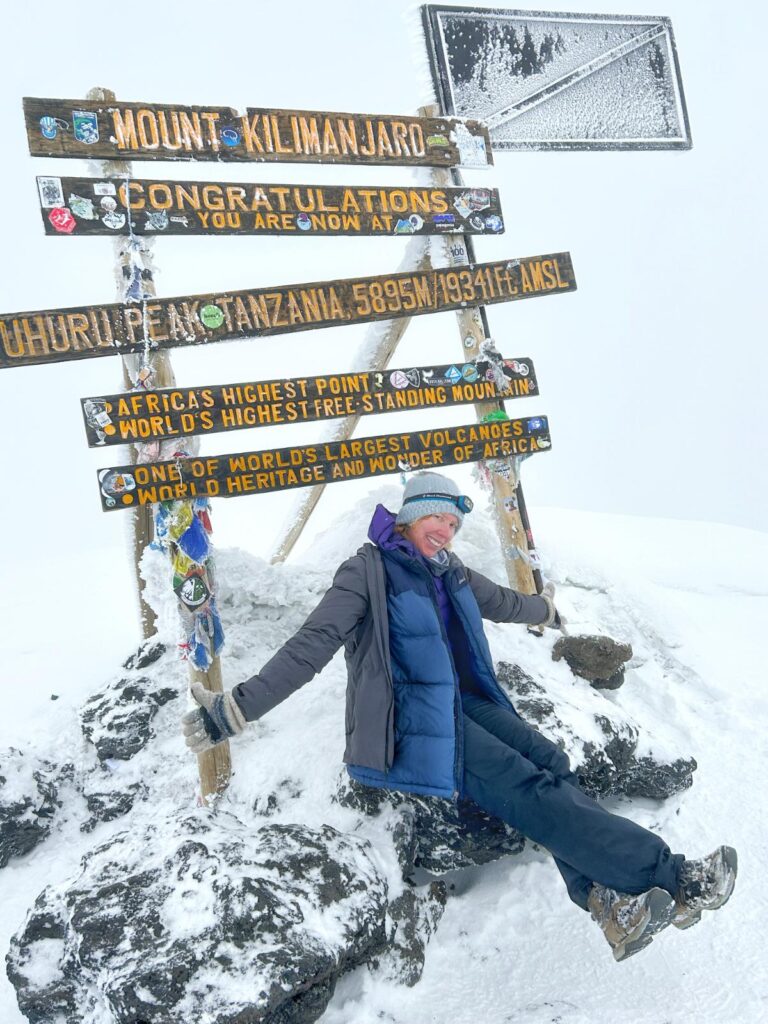
It feels surreal to stand on the highest point in Africa, on the iconic snow-topped peak that appears on the cover of almost every Tanzania brochure. Truth be told, the day our group summited, there was a wild snowstorm, so we didn’t get the view we were hoping for, but it made reaching the top feel like even more of an accomplishment. If you’re lucky enough to get a clear day, it makes for some stunning views, and I’ve heard it’s absolutely breathtaking! The whole journey up to there felt like that for me, so it still felt incredible. It’s known as the “Roof of Africa” because it stands at 19,341 feet (5,895 metres). It’s the highest of any high-altitude trek I’ve done, and a clear reminder that you are capable of way more than you think. Imagine how incredible it would feel to stand at the highest point in Africa, and on top of the highest free-standing mountain in the world!
2) One of the Seven Summits
Reaching the top of the highest mountain on each continent is considered the ultimate challenge for climbers. Each mountain has its own unique terrain, climate, and altitude, making this adventure a true test of skill, endurance, and patience.
These are the Seven Summits. Note that Kilimanjaro ranks as the 4th highest! 🙂
- Everest – Asia – 8,849 m / 29,032 ft
- Aconcagua – South America – 6,961 m / 22,838 ft
- Denali – North America – 6,190 m / 20,310 ft
- Kilimanjaro – Africa – 5,895 m / 19,341 ft
- Elbrus – Europe – 5,642 m / 18,510 ft
- Vinson – Antarctica – 4,892 m / 16,050 ft
- Puncak Jaya – Oceania – 4,884 m / 16,024 ft
Sources vary as to the exact number, but show that less than 750 people have completed all seven summits, so completing Mt. Kilimanjaro alone is a big accomplishment and well worth celebrating.
3) Five Diverse Climate Zones
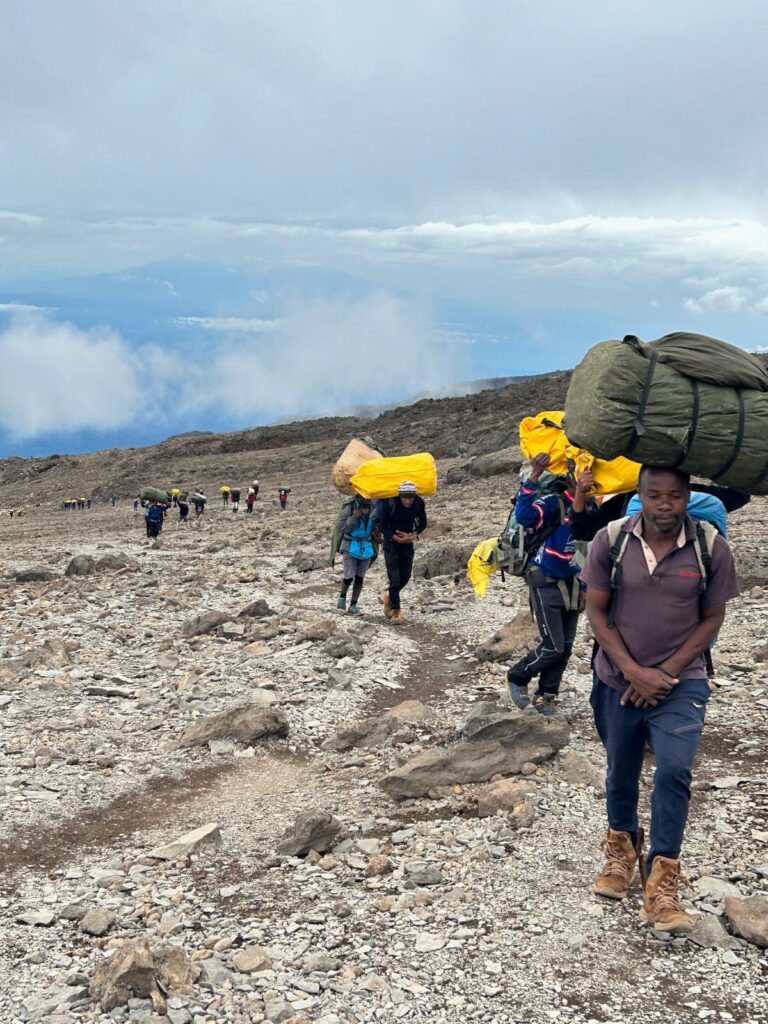
The trek is absolutely stunning every step of the way. You start in a tropical jungle and end up at what feels like the North Pole all on one mountain. You hike through five incredibly diverse climate zones, all beautiful in their own way, and it keeps the whole journey exciting and fascinating.
First is the Cultivation Zone. This area sits at 2,600–6,000 ft (792–1,800 m) and is warm and humid, with daytime temperatures of 21–32°C and nights around 4–15°C. Thanks to its fertile volcanic soil, it is perfect for agriculture, with crops like bananas, yams, potatoes, beans, maize, sugarcane, avocados, papayas, and my favourite one… coffee! You also pass through Chaga villages and farmland as you begin your journey.
Next is the Rainforest Zone, temperatures similar to the lower zone. Lush jungly vibes here. It’s often rainy and humid, so the trails can get muddy and slippery. You’ll often spot monkeys swinging through the trees here. Many treks start and end in this zone. Mine began here, with a scenic adventurous bus ride into the forest.
Then you enter the Heath & Moorland Zone with an altitude of 9,200–11,000 ft (2,800–3,350 m). Temps: Day: 10–27°C, Night: -1 to 15°C. Less rain, more wind, and you’re right in the clouds sometimes. This is where you’ll start to notice the effects of altitude, as the landscape opens up and the air becomes cooler and more exposed.
Then you move into the Alpine Desert Zone with an altitude of 13,200–16,500 ft (4,020–5,030 m). It’s cold, dry, and very windy with very little rainfall and strong sun exposure. The landscape feels wide open and rocky. This is also where I really noticed the altitude and felt a bit of altitude sickness, but we got incredible lightning storms at camp, which were really magical even though I felt sick. Even with a pounding headache and a flipping stomach, it was still an unforgettable part of the climb.
The final zone you enter is the Arctic Zone with an altitude of 16,500–19,340 ft (5,030–5,895 m). It is super cold with very little oxygen and harsh winds. The terrain is glaciers, ice fields, and volcanic rock, and it feels like the North Pole even though you are near the equator. No plant life exists here. Summit night starts in this zone, usually around 10 pm to midnight, as you climb through the dark, aiming for sunrise at the summit.
4) No technical climbing required
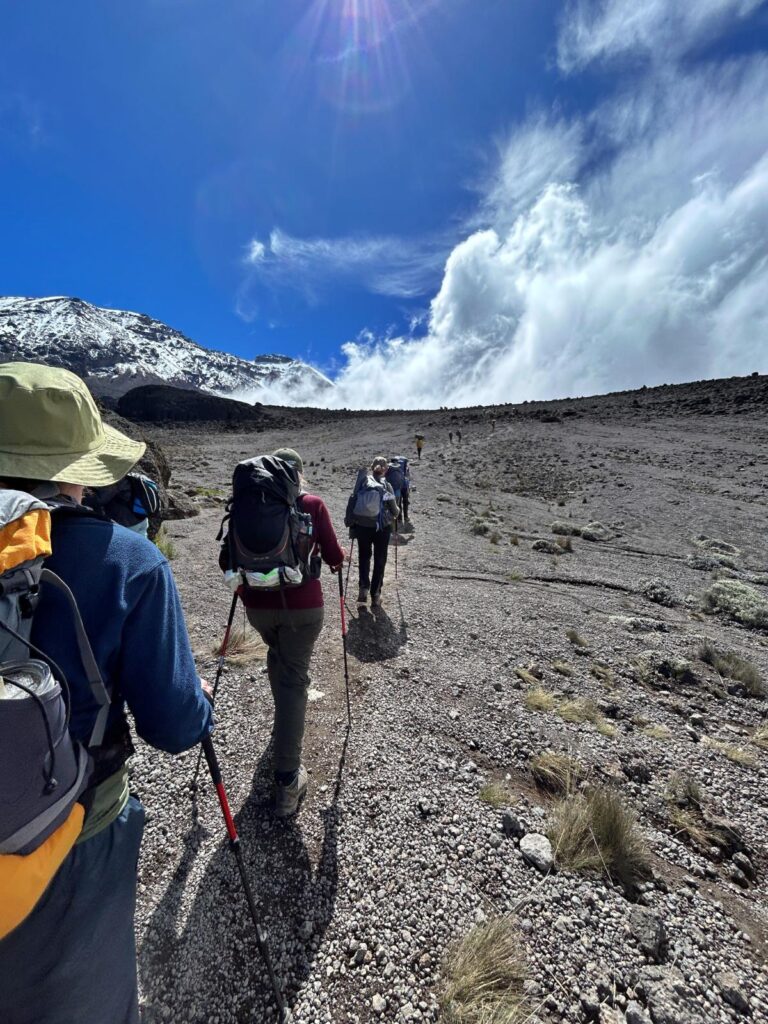
Kilimanjaro is one of the highest mountains in the world that can be climbed without technical mountaineering skills or gear, such as ropes or ice axes, making it very accessible. It is still a challenging climb, mainly due to altitude and weather conditions, and it really tests your endurance. It makes Kilimanjaro more accessible to a wide range of hikers compared to other mountains of similar height.
5) The Animal Sightings
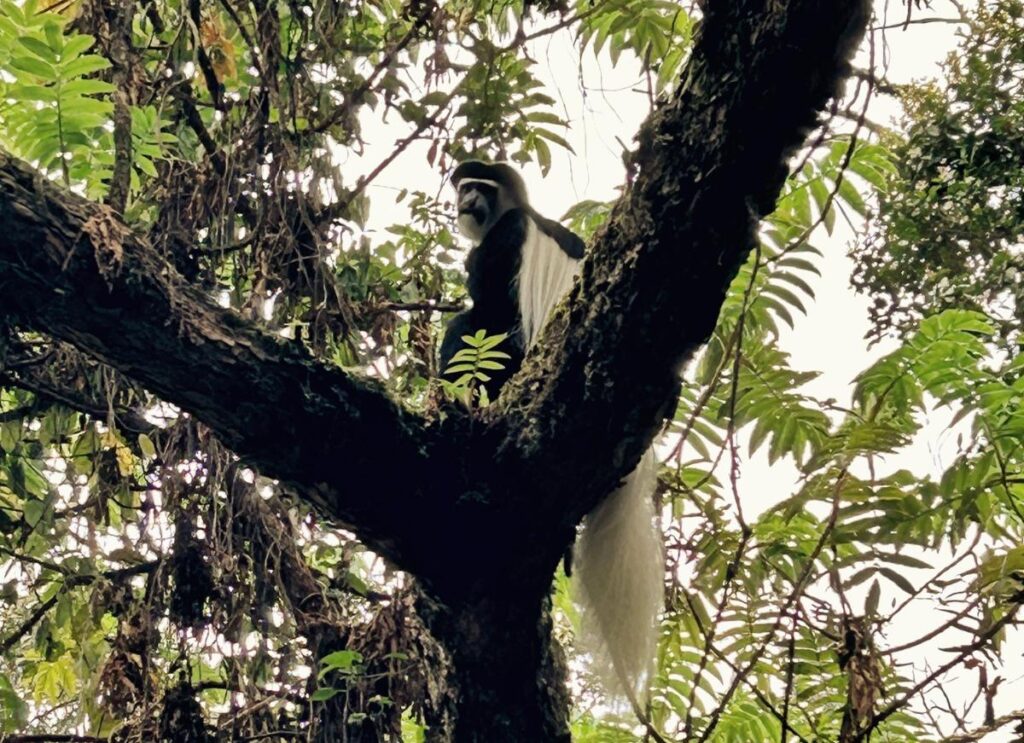
Mt. Kilimanjaro is home to around 154 species of animals, many of which live in the rainforest zone in the lower slopes. It is quite common to spot monkeys in the rainforest zone, such as blue, colobus, and vervet monkeys. You may also come across other unique forest animals like bushbuck, duiker, warthog, and tree hyrax (dassies), along with birdlife such as the white-necked raven. You may also notice the Kilimanjaro white-eye, a small forest bird found higher up in the rainforest zone, which is a subtle sign that you are gaining altitude as you climb.
Although it is rare, it is still possible to spot larger animals such as elephants and buffalo, as they also live on the mountain, and if you are super lucky, maybe even spot a leopard. (We only saw buffalo poop, but hey, it’s still proof they are in the area!)
6) A Photo with the “Pineapple Trees”
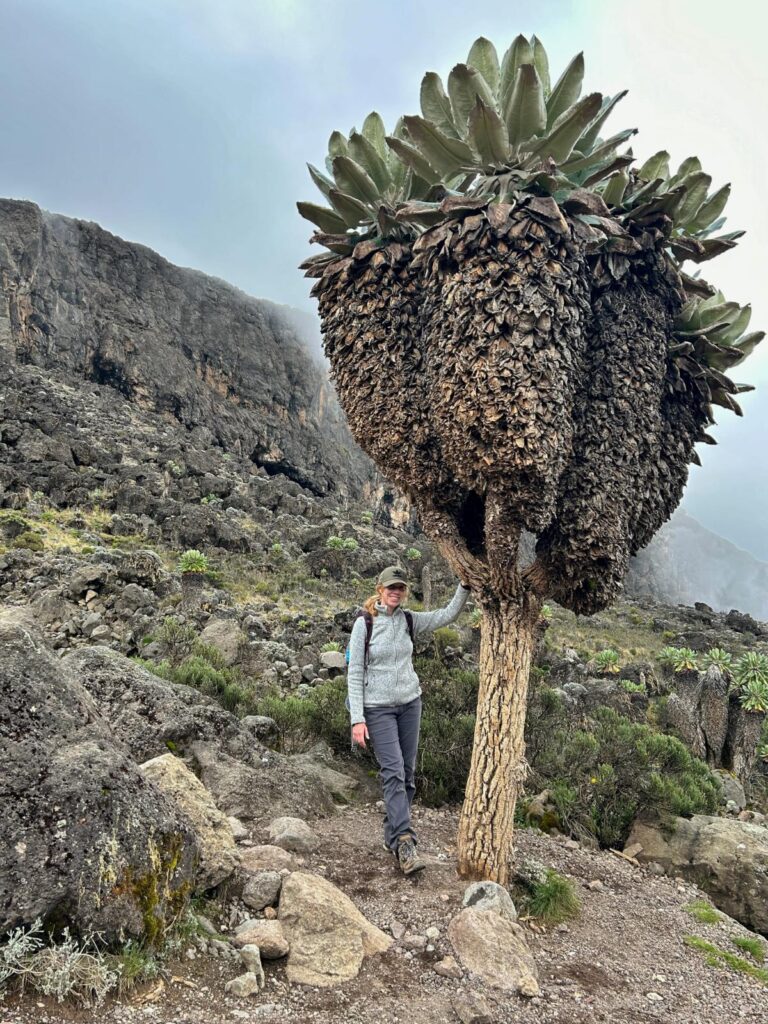
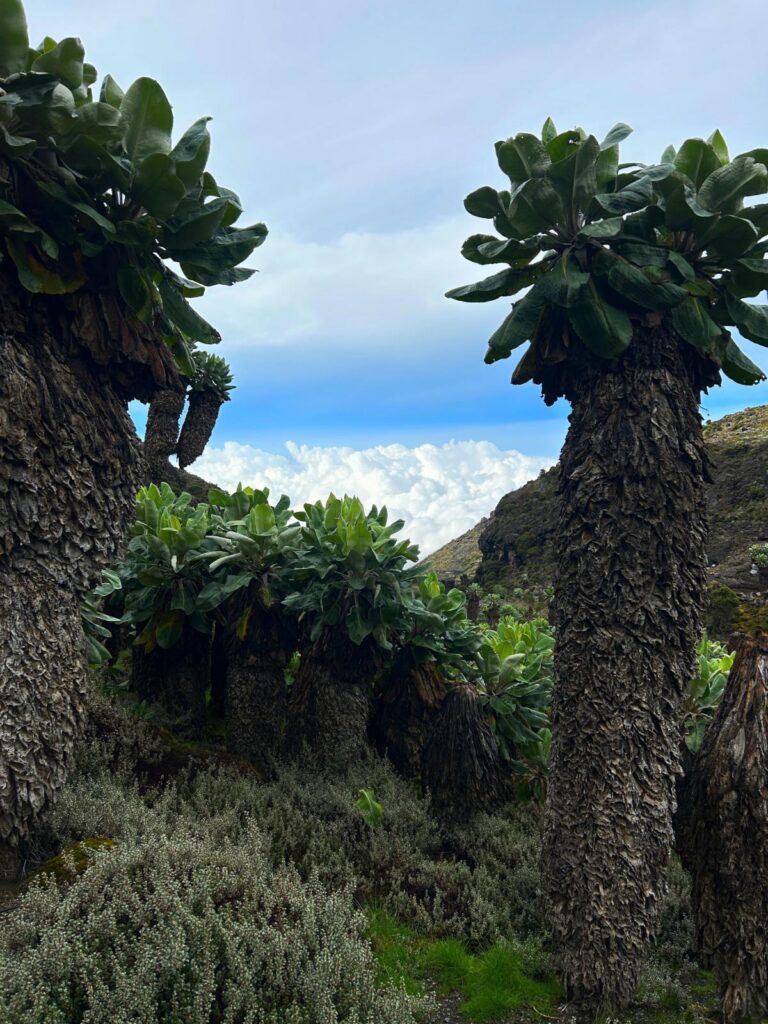
This was one of my favourite parts of my whole trek. I call them “pineapple trees” because they look like a mix of a pineapple and cactus crossed with a palm tree and sort of look like they are from another planet. They look really cool, and it’s even more special that they are endemic to Kilimanjaro, meaning they ONLY exist and grow on the slopes of Kilimanjaro, which I find absolutely fascinating. Its actual name is Gina Groundsel (Dendrosenecio Kilimajari), a unique plant that grows around the Shira Plateau and Barranco Camp.
They thrive in high altitudes between 9200 ft (2800m) and 11,000 ft (3,500m) in the cold air, with intense winds, in the Heath & Moorland Zone. They grow up to 10m (33 ft) and typically live for several hundred years, with estimates of around 300 to 400 years, some even up to 500. They are incredibly resilient, growing slowly and able to survive extreme sun during the day, freezing temperatures at night, and strong winds that can reach up to 100 km/hour. These plants are absolutely incredible, super unique and were a huge highlight of my Kilimanjaro journey.
7) Community
One of the most special parts of the whole experience is the people you connect with and share the journey with. Many of the guides and porters come from the Chaga tribe, who have a deep connection to the mountain. We started our journey together with our guides and porters all piled into one bus right up the mountain to the start of the trail, so I started to get to know them. The group you trek with is often small enough that you all bond a lot along the way over such a meaningful shared experience.
8) Supports the Local Economy
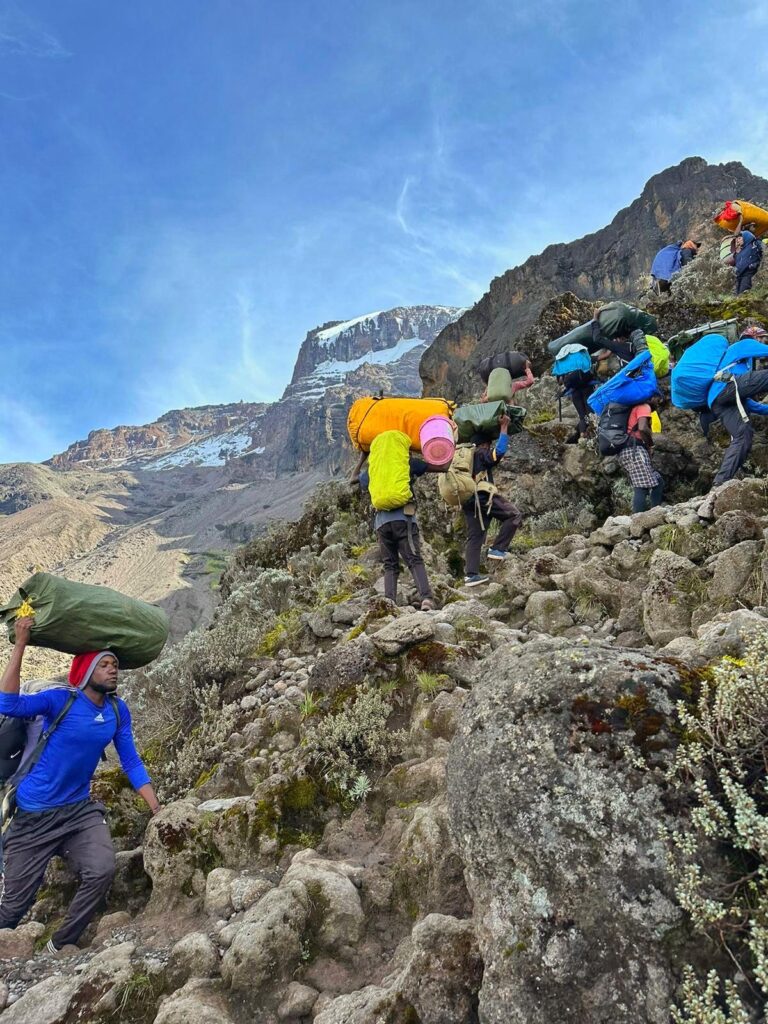
By climbing Kilimanjaro, you help create jobs for porters, guides, cooks, and support staff. Kilimanjaro treks require large teams, and many of them are local to the region. Some trekking companies may accept donated items such as hiking boots, running shoes, jackets, and other gear at the end of a trek, depending on arrangements and need.
While you are in the area, consider popping into some local shops and restaurants as well, which is another great way to contribute to the local economy. Hot Tip: Be sure to book a trek with a KPAP (Kilimanjaro Porters Assistance Project) affiliated company, which helps ensure fair payment and proper working conditions for porters.
9) Song, Dance, and Positive Energy on the Mountain
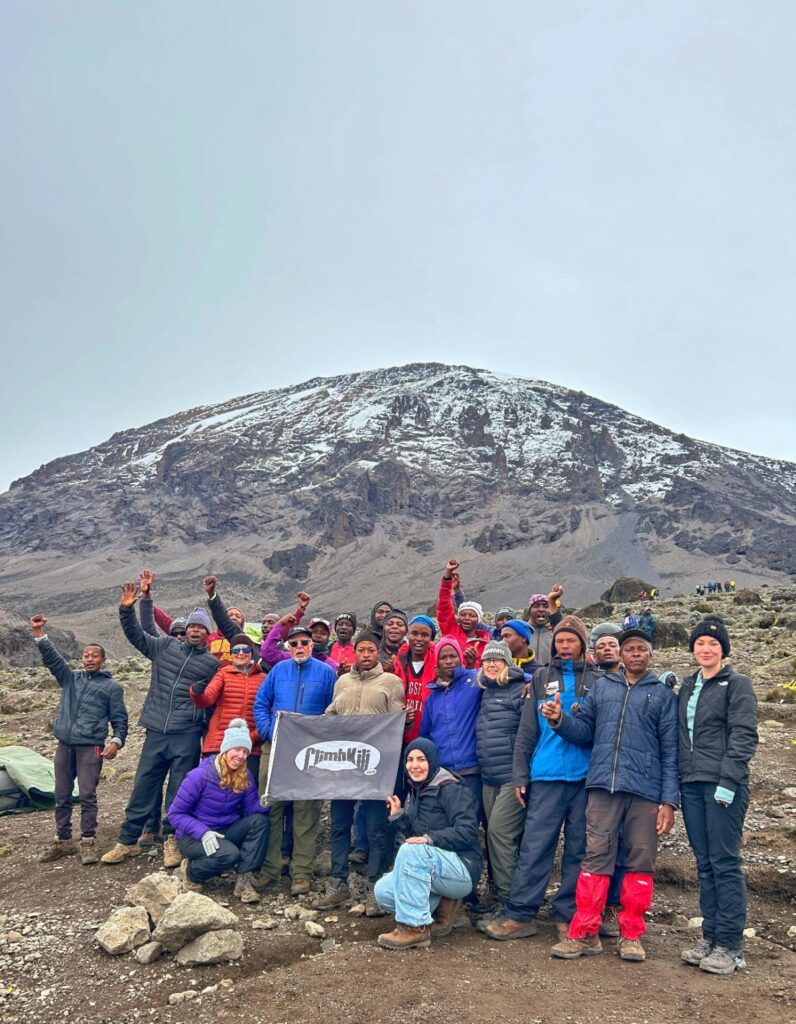
One of the best parts of the trek was our early morning song and dance, led daily by the crew right before leaving each camp, to build the positive energy, warm up our bodies, and get us pumped up for the long day of trekking ahead. It looks a bit different depending on the trekking company you book with, but I did see a common theme of this among many groups we crossed paths with along the way.
It really connected our group in a powerful way, and it was one of the moments I looked forward to the most each day, that most reminded me where I was, how incredible the whole experience was, and how lucky I was to be a part of it. This was a huge highlight for me in my Kilimanjaro experience.
10) Summit Night
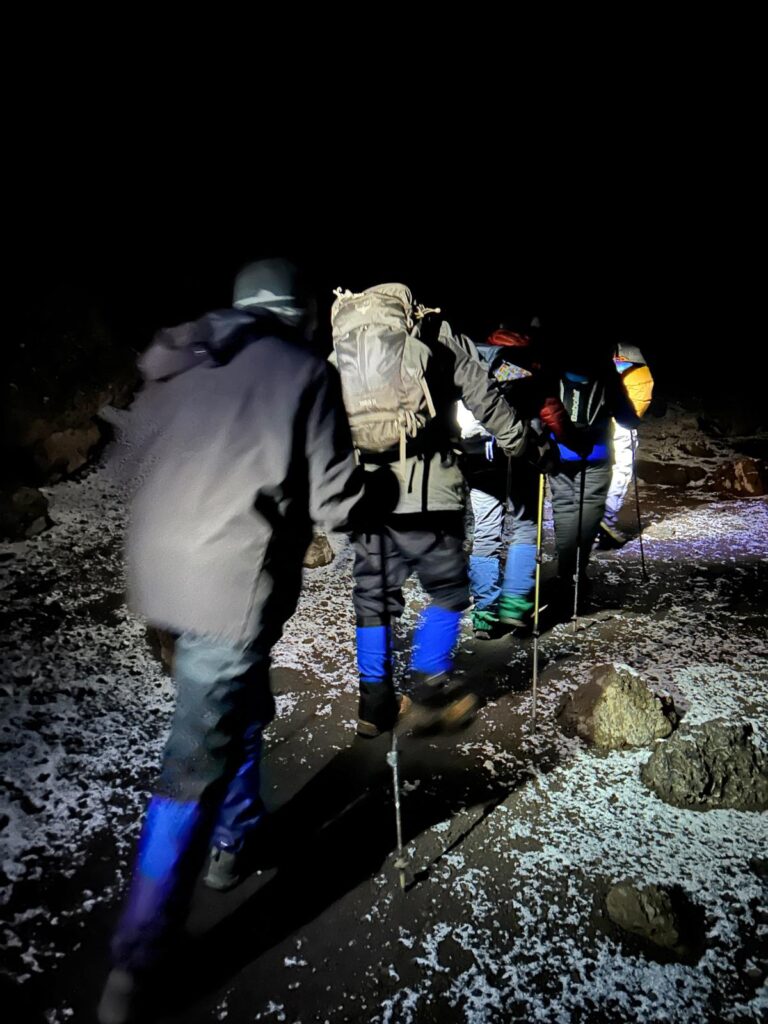
Starting the hike at midnight, after very little sleep and at such high altitude already sets the tone for the ultimate challenge. In our case, we were hiking through freezing temperatures and sideways snow, which added another layer of difficulty. Near the top, even our guide had trouble finding the trail at one point because of how blizzardy it was, and it was hard to see even a few steps in front of us. If you’re lucky and get clear skies on summit night, you ideally reach the summit for sunrise and are rewarded with incredible views.
Though even without them, the sense of accomplishment is still powerful. Summit night might be one of the hardest things you ever experience, as it challenges you physically, mentally, and emotionally all at once, but reaching the top brings an overwhelming sense of achievement and a reminder that you are stronger than you think, and capable of more than you realize. It also builds an inner confidence in yourself, knowing you can push through something that once felt impossible.
11) Slow Down & Be Present (“Pole Pole”)
In our fast-paced, busy world, it’s nice to step away from all the noise once in a while and step into the wilderness, where time seems to move a little slower. On a mountain of such high altitude, there is no space for rushing. Your body will not allow it, and adjusting to the altitude requires slow, steady movement. In Tanzania, they say “pole pole,” which in Swahili means “slowly, slowly.” It brings you into the present moment and allows you to fully embrace the here and now.
On summit night, this phrase becomes something you rely on. It was so challenging that I didn’t have space to think about anything other than putting one foot in front of the other and the basics, like taking a sip of water. The guides use this phrase often throughout the trek, and it becomes a good reminder, not just on the mountain but in life, to slow down and be present. That is where the magic is.
12) Camping Life on the Mountain
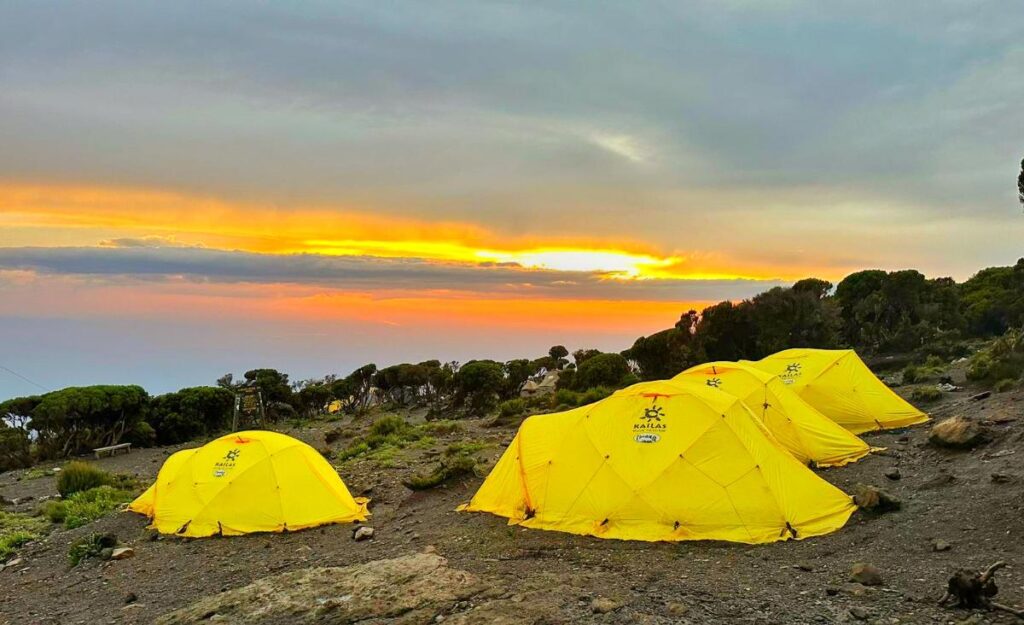
Sleeping in tents at different elevations, and waking up in a different climate zone each day, keeps it an exciting adventure. Each day feels completely different as you move through changing landscapes and altitudes, from forest to alpine desert and eventually into snowy, arctic-like conditions. There is something quite special about living this simply for several days, where your focus becomes just the basics: eat, hike, rest, and repeat.
In my group, the meals were absolutely delicious, which really added to the experience. I know this may vary depending on the company you choose, but a big part of enjoying life at camp was spending time in the food tent together, sharing meals, stories, and life experiences, while connecting over our journey. It naturally strengthened the bond between us all.
I could probably list a whole lot more reasons why climbing Kilimanjaro should be on your bucket list, but these are some of the big ones for me. I hope this has given you a sense of what the experience is like, and in some way inspires you to explore what’s calling you on your own bucket list adventures. I really enjoyed writing this and reliving the journey all over again. Thanks for coming along for the ride.